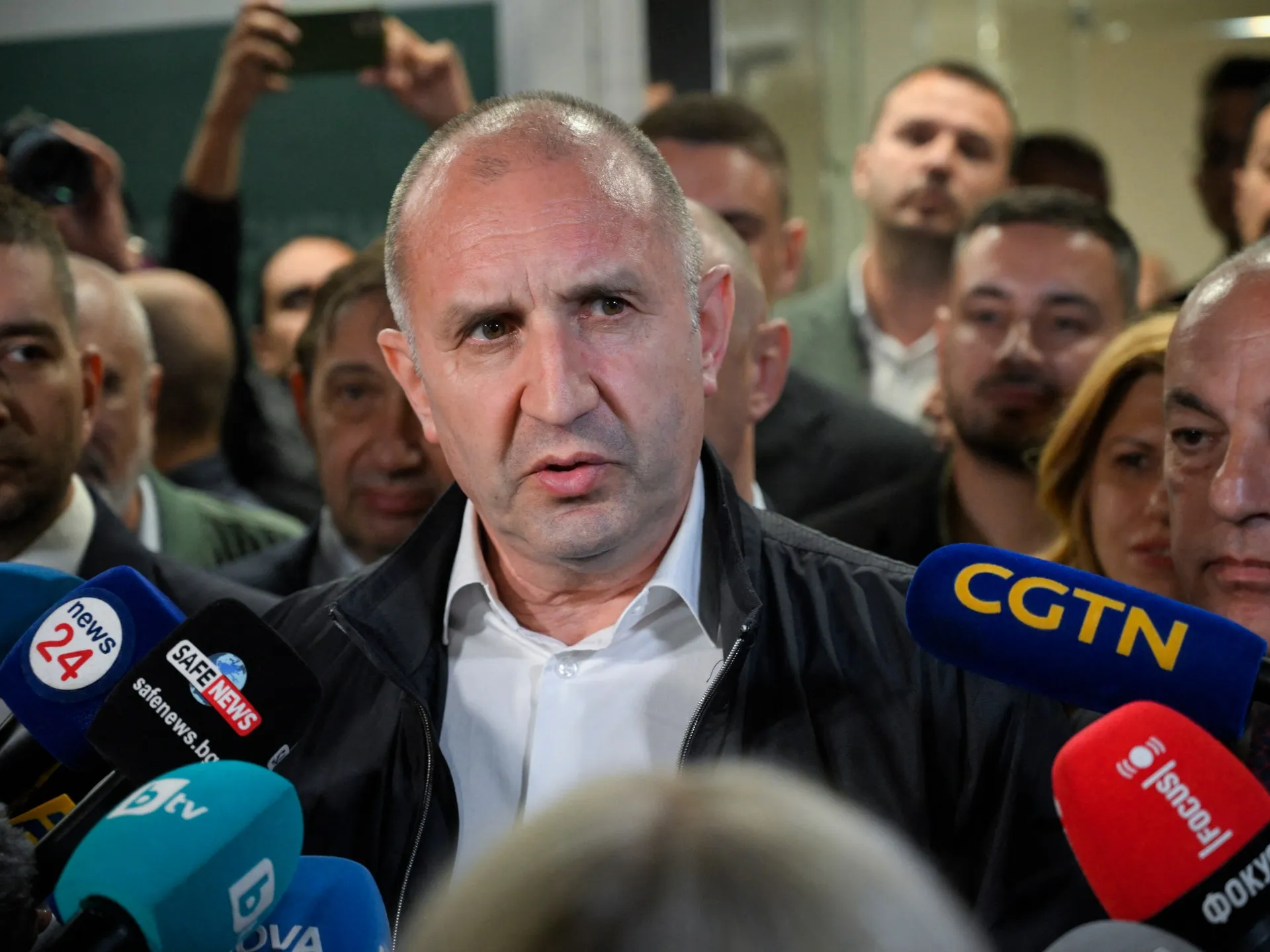


Bulgaria’s eighth parliamentary election in five years has concluded with former president Rumen Radev’s Progressive Bulgaria party emerging as the clear winner, securing 44.7 percent of the vote with 98.3 percent of ballots tallied, and projected to win roughly 130 of the 240 seats in parliament — a decisive majority that raises hopes for ending years of political instability marked by eight elections since 2021. Radev, who served as Bulgaria’s largely ceremonial president from 2017 to January 2024 before stepping down to run for prime minister, positioned himself as an outsider determined to dismantle what he calls the country’s “oligarchic governance model,” a system widely blamed for entrenched corruption, political volatility, and public disillusionment. His campaign resonated deeply with voters frustrated by rising living costs, perceived elite capture, and the failure of successive governments to deliver lasting reform. Notably, Radev had previously supported anti-corruption protests in 2025 that toppled the conservative-backed government of former Prime Minister Rosen Zhelyazkov, and he urged citizens to vote en masse to counteract vote-buying tactics that have plagued past elections.
Despite his strong pro-European rhetoric — affirming Bulgaria’s continued commitment to its European path and pledging cooperation with pro-European parties on judicial reform — Radev’s foreign policy stance has sparked significant debate both domestically and internationally. While he publicly condemned Russia’s 2022 invasion of Ukraine, he has consistently opposed providing military aid to Kyiv, instead advocating for renewed “practical relations with Russia based on mutual respect and equal treatment.” He objected to a 10-year defence pact between Bulgaria and Ukraine signed in March 2024 and has called for the resumption of Russian energy imports to Europe, directly contradicting EU sanctions and the bloc’s 2027 deadline to cease all Russian energy imports. These positions have led critics across the political spectrum and in Western capitals to label him “pro-Russian,” a characterization he rejects, insisting his approach is pragmatic rather than ideological. In interviews, Radev has emphasized Bulgaria’s unique identity as the only EU member state that is both Slavic and Eastern Orthodox, arguing the country could serve as a vital bridge to restore dialogue with Moscow — a view that found unexpected echo in Kremlin spokesman Dmitry Peskov’s praise of Radev’s willingness to engage in pragmatic dialogue.
Domestically, Radev has also voiced eurosceptic sentiments, criticizing the imposition of the euro in Bulgaria without public consultation and lamenting that citizens were promised membership in a “club of the rich” only to face rising bills and economic strain. He has questioned the EU’s overreliance on renewable energy policies, suggesting they may not suit Bulgaria’s economic realities. Yet, despite these critiques, he has consistently affirmed Bulgaria’s NATO and EU membership as non-negotiable pillars of national security and prosperity, stressing that a strong Bulgaria requires critical thinking and pragmatism — not blind allegiance to ideological blocs.
The election result marks a dramatic shift from pre-vote projections: while Alpha Research had forecast Radev’s party at just 34.2 percent — suggesting a likely coalition — the actual outcome of 44.7 percent represents a landslide that surpassed even the most optimistic polls. This margin dwarfs the performances of traditional rivals: the centre-right GERB party, led by former Prime Minister Boyko Borissov, secured only 13.4 percent, and the reformist PP-DB coalition garnered 12.7 percent. The fragmentation of the opposition underscores the depth of public disillusionment with established parties, many of which have been toppled by protests or parliamentary deadlocks since 2021.
Although Radev now holds a clear parliamentary mandate, he has not ruled out forming a coalition with smaller parties to ensure broader legitimacy and long-term stability, stating, “We are ready to consider different options so that Bulgaria can have a regular and stable government.” His victory comes after the December 2023 resignation of Prime Minister Rosen Zhelyazkov’s cabinet, which preceded a looming no-confidence vote and triggered the snap election. The campaign was dominated by bread-and-butter issues: inflation, energy costs, corruption, and the perceived absence of credible alternatives — themes that Radev successfully channeled into a narrative of renewal and moral clarity.
It is important to note that while Radev held the presidency for nearly a decade, the role in Bulgaria is largely ceremonial; real executive power resides with the prime minister and cabinet, who control policy, appoint ministers, set the legislative agenda, and represent Bulgaria in EU and NATO forums. As prime minister-designate, Radev will now assume these responsibilities, shaping the country’s domestic agenda and its role in European and Atlantic alliances. His leadership will be closely watched not only for its potential to end Bulgaria’s cycle of political chaos but also for how it navigates the delicate balance between national sovereignty, European integration, and relations with Russia — a balancing act that could redefine Bulgaria’s place in Europe for years to come.
Bulgaria’s former President Radev wins election: All you need to know