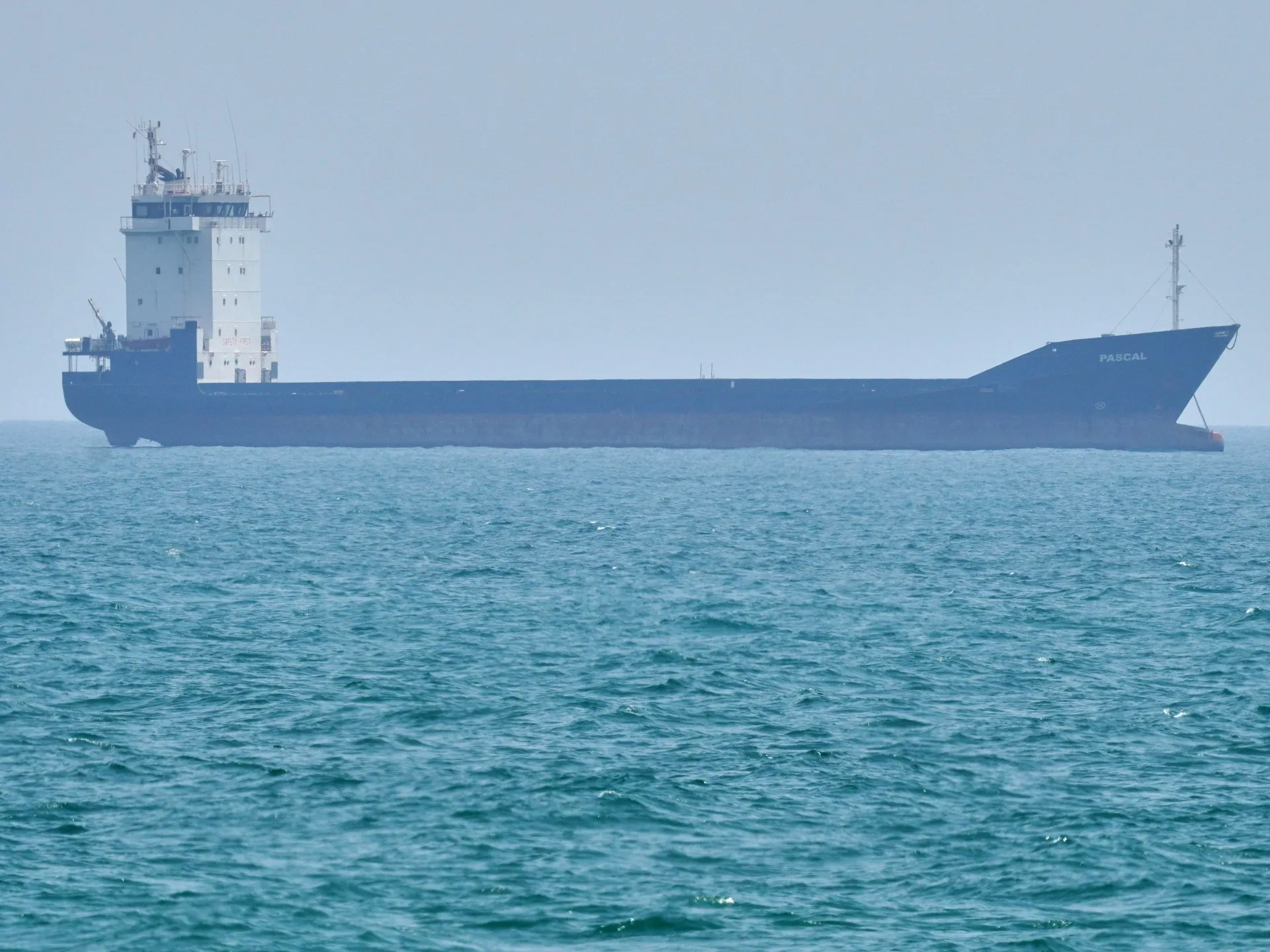


Peace negotiations between the United States and Iran are facing serious uncertainty following the U.S. military’s seizure of an Iranian cargo vessel in the Strait of Hormuz, a move that has heightened tensions in an already volatile region. President Donald Trump announced that a U.S. delegation would travel to Pakistan to resume talks aimed at ending the conflict with Iran, but Tehran responded with reluctance, citing the ship seizure as evidence of American bad faith. The incident occurred on Sunday when U.S. forces, operating under the guise of enforcing sanctions, intercepted and boarded the Iranian-flagged cargo ship Touska after disabling its propulsion with guided-missile fire from the USS Spruance. Marines descended from helicopters via ropes to take control of the vessel, which Trump claimed was carrying sanctioned goods and had ignored repeated warnings. He boasted that the U.S. military had 'stopped them right in their tracks by blowing a hole in the engine room,' framing the action as a necessary enforcement measure.
The seizure has triggered a sharp diplomatic backlash from Iran. Foreign Ministry spokesman Esmail Baghaei stated that Tehran had no current plans to attend the upcoming round of talks in Islamabad, accusing the U.S. of lacking 'seriousness in pursuing a diplomatic process.' Iran’s Revolutionary Guard also issued a vague but ominous warning of retaliation against U.S. military forces, further raising the specter of direct confrontation. The timing is particularly sensitive, as the April 8 ceasefire agreement between the U.S.-Israel coalition and Iran is set to expire on Wednesday, creating a narrow window for diplomacy before hostilities could resume.
Despite the uncertainty, preparations for the talks proceeded in Islamabad, where security personnel were deployed and a U.S. Air Force C-17 aircraft landed at Nur Khan military base in anticipation of the delegation’s arrival. Trump, speaking in his characteristic combative tone, warned Iran that walking away from negotiations would result in devastating consequences, declaring, 'We’re offering a very fair and reasonable DEAL, and I hope they take it because, if they don't, the United States is going to knock out every single Power Plant, and every single Bridge, in Iran. NO MORE MR. NICE GUY!' This rhetoric follows the breakdown of the first round of talks led by Vice President Vance just over a week earlier, during which Vance accused Iran of refusing to accept U.S. demands regarding its nuclear enrichment program.
The geopolitical fallout has extended beyond the bilateral conflict. Oil markets reacted swiftly to the seizure, with prices surging more than 5.3% to $95.62 per barrel on Monday, up from $90.38 at Friday’s close, reflecting fears of supply disruptions in the strategically vital Strait of Hormuz—a chokepoint through which roughly 20% of global oil trade passes. China, a key Iranian ally, expressed concern over the 'forcible interception' of the Touska and urged a return to diplomacy, according to the Associated Press.
Amid the diplomatic fray, humanitarian and regional dimensions of the conflict remain grim. Reports indicate that 383 of the deceased in recent hostilities were children under 18, according to Iran’s Legal Medicine Organization via Mizan news agency. Meanwhile, a separate but related ceasefire between Israel and Hezbollah in Lebanon continues to hold, albeit tenuously, with Israeli airstrikes continuing in southern Lebanon under the pretext of self-defense. Hezbollah claimed responsibility for a weekend explosion that killed at least one Israeli soldier, asserting the device was planted before the ceasefire took effect.
The broader context reveals a deepening crisis: Trump’s approval rating has plummeted to a new low, with 63% of respondents in an NBC poll disapproving of his performance, and two-thirds criticizing his handling of both the Iran conflict and inflation. As the region teeters on the brink of renewed escalation, the fate of the Islamabad talks hangs in the balance—dependent not only on diplomatic will but on whether the U.S. will de-escalate its military actions in favor of genuine negotiation.
Peace talks in doubt as U.S. seizes Iranian ship