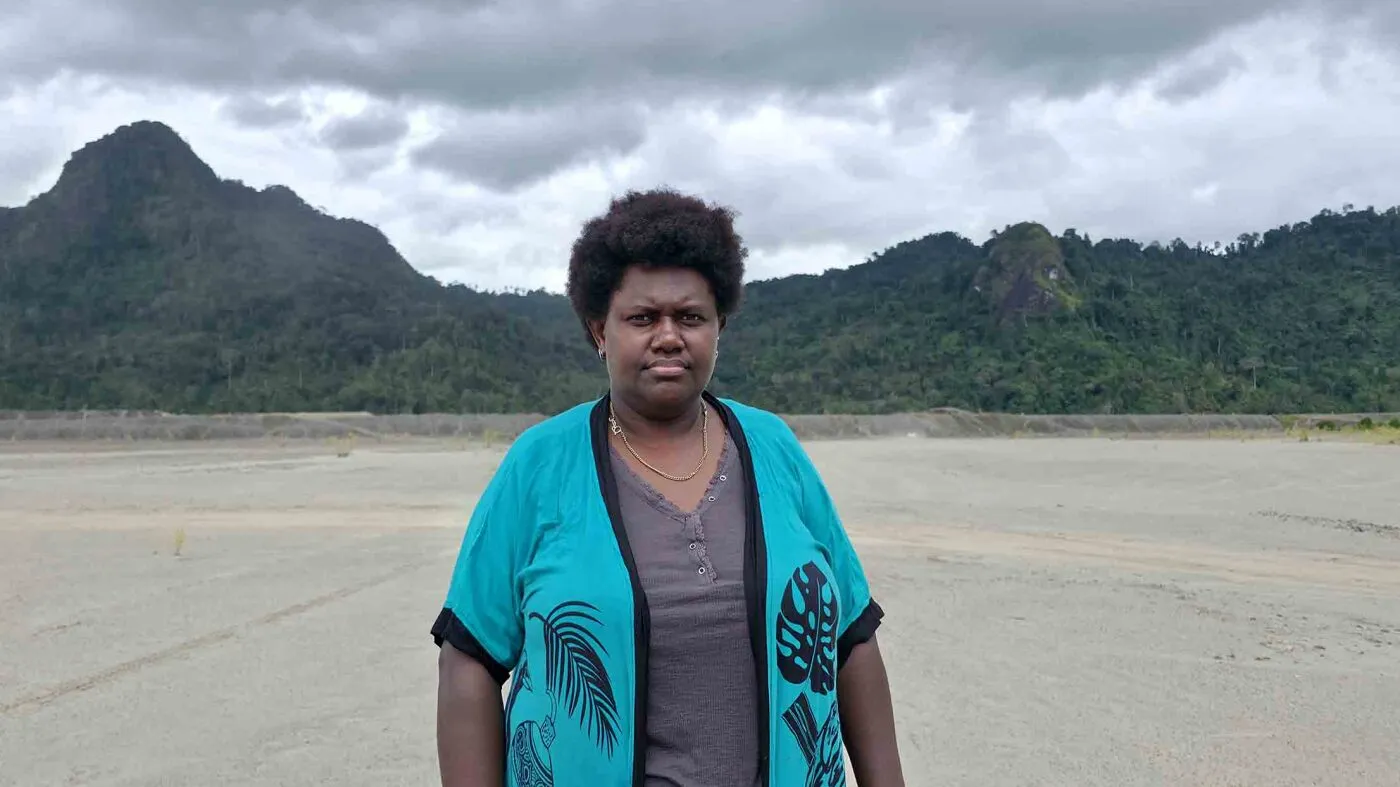


Theonila Roka Matbob, a 35-year-old indigenous activist from the Nasioi people and Basikang clan of Papua New Guinea’s Autonomous Region of Bougainville, has been awarded the 2026 Goldman Environmental Prize for her relentless efforts to heal the environmental and social wounds inflicted by the abandoned Panguna copper and gold mine. Once operated by Rio Tinto through its subsidiary Bougainville Copper Ltd., the mine extracted millions of tons of copper and hundreds of tons of gold and silver between 1972 and 1989 before closing amid a bloody, decade-long civil war fueled by ethnic tensions, profit extraction, and the militarization of dissent. Though the mine has been shuttered for over three decades, its legacy endures: poisoned rivers, barren mountains stripped of forest, and a generation raised in fear — warned by elders not to drink the water or eat from the soil, though never told why.
Born into this shattered landscape, Matbob recalls a childhood defined by survival mode. Her father was taken and killed by an armed group just days before her third birthday, and her family became nomadic, seeking refuge in government camps. Even after the 1998 peace agreement ended the war, the environmental devastation remained unaddressed, leaving thousands denied a normal island life. It was this injustice that ignited her activism — beginning as a high school student organizing protests, then evolving into leadership as the lead complainant in a landmark human rights complaint filed by the Human Rights Law Centre against Rio Tinto.
Her persistence yielded tangible results: in 2021, Rio Tinto agreed to fund an independent environmental and social impact assessment; by 2024, the corporation signed a memorandum of understanding to collaborate with impacted communities on remediation efforts. Matbob describes these milestones not as victories to celebrate, but as necessary steps in a longer journey — each one a validation that her community’s voice was finally heard. "It is a dream come true," she says, "to represent the people’s voice and talk directly to the stakeholder who changed our lives."
Her motivation is deeply rooted in identity and intergenerational responsibility. As a woman of the Nasioi people, she embodies the cultural truth that "we women are the land guardians and keepers" — a belief that fuels her refusal to relocate, even as doing so would mean entering forbidden tribal territories. She fights not just for herself, but for her two young children, aged 8 and 4, and for the countless other children growing up in a landscape still scarred by toxins and neglect. Her election to Bougainville’s House of Representatives amplified her advocacy, though she acknowledges the patriarchal nature of local politics — a system she navigates by drawing strength from her clan’s matriarchal traditions.
Matbob’s work transcends environmental cleanup; it is a pursuit of justice, dignity, and cultural survival. She demands not only technical remediation but accountability, healing, and the restoration of a way of life that was stolen. The Goldman Prize recognizes her as a grassroots champion whose courage has united communities, compelled corporate accountability, and rekindled hope in a place where the rainforest once stood — and where, thanks to her, it may yet rise again.
A mine despoiled the beauty of the rainforest. This Goldman Prize winner took action